
We are going back to England! The dear husband is participating in the graduation ceremony from his MPhil and we are making it a grand old family trip to celebrate. Our year in Cambridge, delightful as it was, did not afford us quite so many opportunities to travel as we might have liked due to restrictions both personal and Covidian. Excursions to Ely, York, Edinburgh, Hadrian’s Wall, Norwich, and Walsingham gave us an incredible window into thousands of years of British history but left us rather woefully ignorant of anything south of Cambridgeshire. Even our trips to London were few and far between–though the Queen’s (may she rest in peace) Jubilee parade is a day I will long remember. This summer we mean to remedy the lacuna of our experiences of British countrysides and cityscapes as much as one possibly can in 2 short weeks. With that in mind, I have compiled an itinerary that strikes a fair compromise between my own interests (Classics, catholicism, and medieval history) and those of my husband (protestantism and military history).
- Oxford.
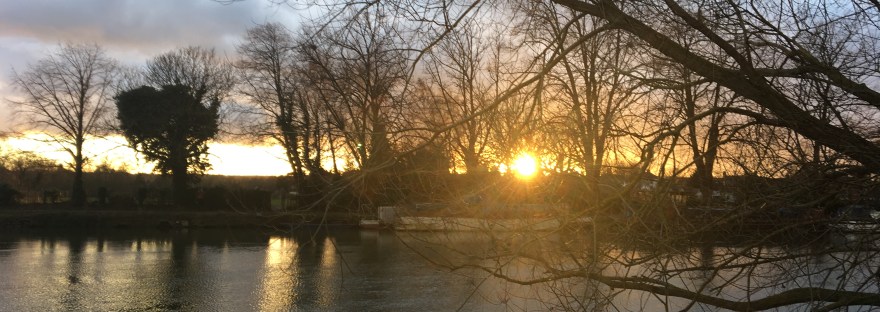
I spent ten weeks at Stanford’s study abroad program at The Other Place in the great snowy winter of 2018 and never made it back the entire time we lived in Cambridge. I loved Oxford when I was there (this piece’s featured photo is from an early morning walk to the Corpus boathouse) and both my husband and I turned down offers to study there (he in favor of Cambridge, I in favor of University of Toronto). Motivated less by “what might have been” and more by nostalgia, I cannot wait to return to my favorite haunts from five years ago and experience the most museum-like city in which I have ever lived with new eyes. - Bath. I have wanted to visit the healing waters of Aquae Sulis as long as I have loved classics, which extends back to when I was eight or nine years old. Somehow, every opportunity encountered logistical difficulties. While Chaucer’s infamous Wife of Bath is perhaps Bath’s only well-known medieval claim to fame, the mostly 19th-century structure of Bath Abbey has roots in a bustling Benedictine priory.
- Bristol. I quite enjoy the experience of walking through verdant fields populated with foundations of Roman buildings, such as Ostia Antica and Vindolanda provide. The Kings Weston Roman Villa offers one such experience, with the added bonus of some rather well-preserved mosaic flooring. Classically inspired mosaic art is one of my few (well, my only) artistic hobbies and the fact that a skeleton (of a man violently killed) lay undiscovered beneath the mosaic floors for 15 centuries only adds to the intrigue of this particular site.
- Colchester. The first capital of Roman Britain (Camulodunum), Colchesteer abounds in Roman walls and fortress remains. In the medieval arena it does not disappoint, boasting a Norman keep and two medieval abbeys which, though only post-dissolution ruins remain, stand testament to the once-bourgeoning medieval Catholic landscape of England. I’m a bit embarrassed to admit it never would have occurred to me to visit here on my own, but my husband’s interest in the military history (there is to this day a garrison there, first established in 43 AD) won it a spot on our list.
- Canterbury. The well-preserved Cathedral and the ruins of St. Augustine’s Abbey stand at opposite ends of 1500 years of Christianity in England. Frankly, I just want to visit and sit with that reality (and maybe catch a glimpse of Justin Welby speaking in tongues).
- Cirencester. Another winning suggestion from my husband. I’ve been dying to visit the Cotswolds area of National Beauty for ages. As we absolutely refuse to rent a car that drives on the wrong side of the road and public transportation options from Cambridge were slim, the opportunity has yet to present itself. I had honestly never heard of Cirencester, but I had heard of Corinium, a bustling Roman military town with an amphitheatre and a fabulous repertoire of mosaics. Hoping we can fill our day with the fort, an extensive museum of Roman artifacts, one of the largest parish Churches in England, and plenty of instagrammable buildings of Cotswold Stone.
- Bury St. Edmunds. Although quite close to Cambridge, we never actually made the trek here. The Abbey around which the town grew was a site of pilgrimage to St. Edmund’s grave and later a center for medieval innovation. It was also a center for conflict between wealthy monks who ran the royal mint and citizens disgruntled by their taxes. While at Cambridge, I attended an excellent talk by Dr. Seb Falk on timekeeping and astronomy in the middle ages which centered around the monks of St. Edmundsbury.
In a month or so I hope to return to this blog and see how many we really end up crossing off our list. In the meantime, I welcome suggestions and must-see stops in any of these destinations! I cannot wait to once again tread streets first paved by the Romans, shop at market squares that were just as bustling 1000 years ago, and laugh at “mushy peas” as a serious menu item.

 Musings of a medievalist mama